Eye Stretching Exercises for Screen Fatigue
By Bathilde Rocchia, creator of BreathInU. Updated .
Why screens tire the eyes
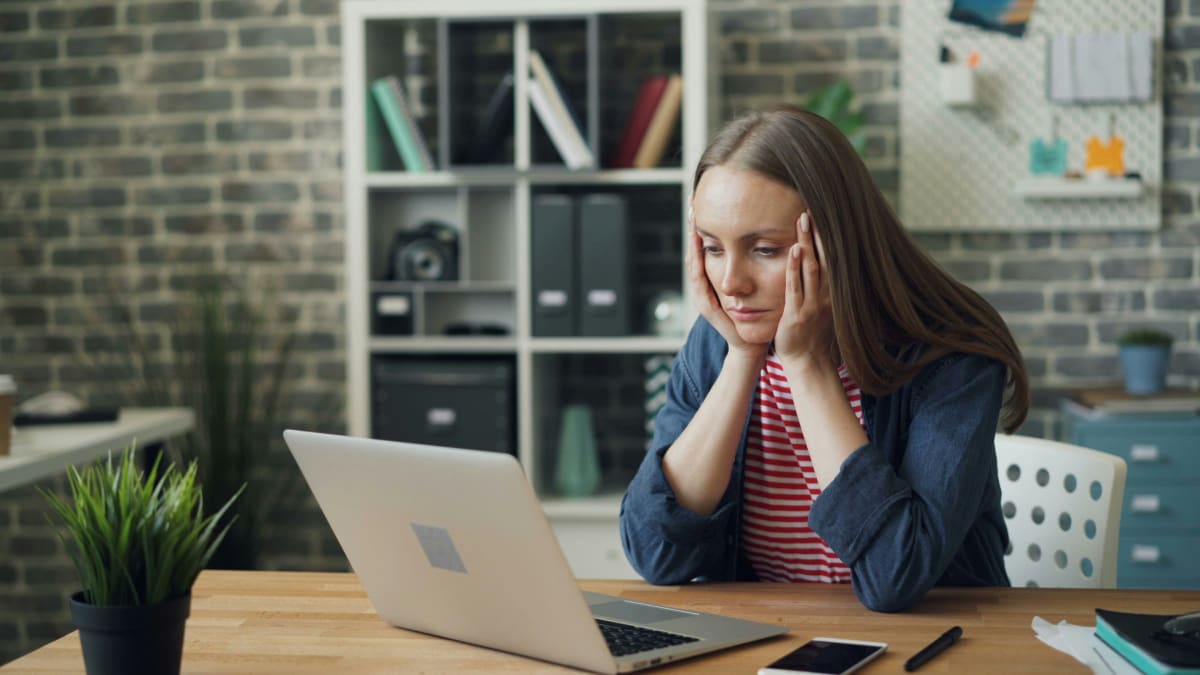
The extraocular muscles aim the eyes. Small focusing muscles change lens shape. Hours of near work (laptop, phone, documents) keep both groups in a narrow range. Blinking often drops. The surface of the eye dries. You get the heavy, sandy, “I cannot read this email” feeling that people call screen fatigue.
Eye stretching will not replace an optometrist, new glasses, or less overtime. It can interrupt a stiff focusing pattern for a few minutes so the next hour of work is less miserable. Pair it with a breath reset from breathing at work if your shoulders rose with the headache.
This is not vision therapy for a diagnosed condition. If you have sudden vision loss, double vision, flashes, or a new severe headache, get medical care.
The 20-20-20 baseline
Every 20 minutes, look at something about 20 feet (6 meters) away for 20 seconds. That is the minimum. Eye stretching is extra movement on top of that, not a substitute for looking far away.
Set a timer. Willpower loses to a spreadsheet.
Four desk exercises (about 4 minutes)
Sit tall. Drop the shoulders. Soften the jaw. Glasses stay on unless your clinician said otherwise.
1. Deliberate blinks (30 seconds)
Close fully, pause, open. Do not squeeze. Ten slow blinks. This is lubrication, not a workout.
2. Left-right tracking (45 seconds)
Look far left without turning the head, then far right. Smooth, not jerky. Six round trips. If it pulls at the neck, you are cheating with the head.
3. Up-down tracking (45 seconds)
Look toward the ceiling, then toward the floor, eyes only. Six round trips. Stop if you feel nauseous.
4. Near-far focus (60 to 90 seconds)
Hold a thumb at arm’s length. Focus on the thumb for 3 seconds, then on a far object (window, end of the room) for 3 seconds. Repeat 8 to 10 times. This is the one that usually helps “screen blur” the most.
Optional: trace a slow rectangle or figure-eight in the air with your gaze, 20 seconds, if tracking felt good.
How often
Once mid-morning and once mid-afternoon is a solid default. After a long video call, do blinks plus near-far only. You do not need a 15-minute yoga-for-eyes class.
If you wear contact lenses and the eyes feel dry, blinks and distance looking first, stretching second. Drops if your clinician recommended them.
What usually does not help
- Staring at palming (covering the eyes) for 10 minutes as a personality
- Rapid darting that makes you seasick
- Doing this in a moving car
- Mixing in alternate nostril breathing on the same how-to. That is a breath practice. It belongs on its own page. Use it after the eyes if you want a mental reset, not as an eye drill.
Combine with posture and breath
Screen fatigue is often neck and breath as much as eyes. After the four drills:
- Three lateral breaths with hands on the ribs
- Or 60 seconds of 4-6 breathing
- Or the 5-minute neck stretches at your desk routine
Then look out a window once more.
How BreathInU uses this
BreathInU includes short eye-stretching sequences inside work-break flows so you do not have to remember the order. The steps above work with no app. Use the app when you want a countdown and a reminder to actually stop typing.